
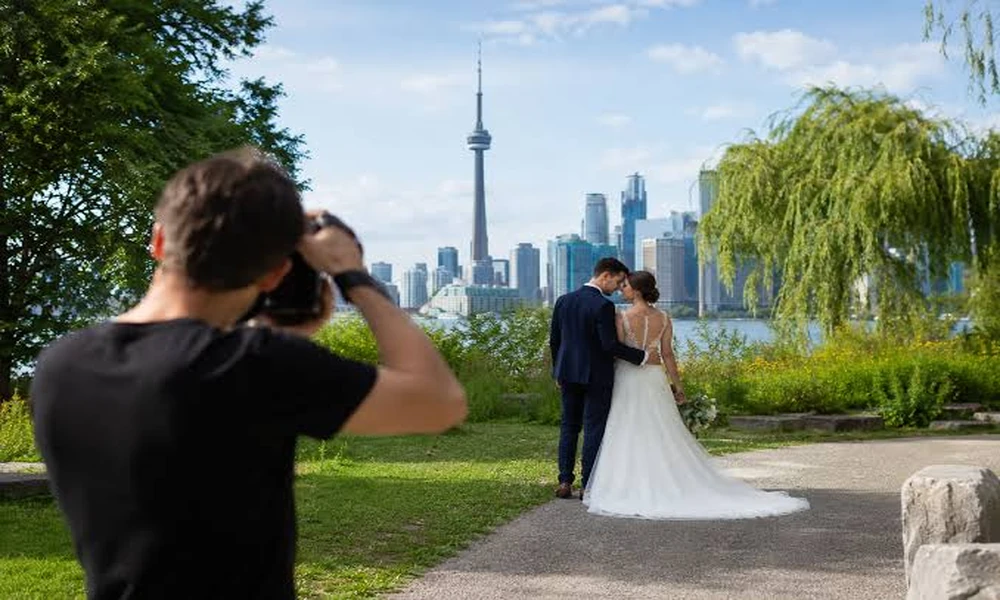
Booking a photographer does not, by itself, secure a Toronto public park for a planned commercial portrait session. The photographer’s availability and the location’s authorization are separate parts of the arrangement. Take the actual proposal to the City’s appropriate park-booking route before treating the setting as confirmed. A place being open to ordinary visitors does not answer whether your intended photographic activity can proceed there.
A place you can visit is not automatically a booked photographic location
A professional preparing personal-brand portraits may picture a familiar Toronto garden as the ideal background. They know the paths, have visited without paying admission and can imagine an outfit that suits the setting. Once a photographer offers a suitable date, it feels as though the appointment is complete. Yet neither a previous visit nor the photographer’s open calendar establishes the arrangement for the proposed commercial still photography.
Start by identifying the actual place. A general park name can cover several areas with different practical conditions. A desired feature might be a garden, conservatory, path or structure rather than the whole park. Give the location enquiry enough detail to identify what you intend to use. “Somewhere green in Toronto” describes a creative preference, not a bookable location.
Keep the activity equally clear. A person stopping for a casual photograph during a walk is not the same proposal as a paid portrait assignment with planned equipment and a coordinated crew. Describe your actual session instead of selecting whichever label seems least demanding. The relevant authority needs to assess what you are proposing, not a reduced description that leaves out the working arrangement.
Do not borrow permission from another event. A wedding party having photographs made nearby may have its own booking, while a commercial production may involve another process. Its presence does not establish that your group can occupy the same place or use the same terms. The useful evidence concerns your own location, activity, date and authorization.
Take the actual still-photography proposal to Park Bookings
The City of Toronto’s commercial photography booking information directs applicants to Client Services – Park Bookings to check the preferred location, date and time. Its commercial section calls for an application, insurance and a map of the requested location, followed by the applicable payment. Use that commercial section for this enquiry rather than importing requirements from the same page’s wedding-ceremony material.
The City’s shoot-planning guidance also distinguishes the route for commercial still photography in parks from Film Office arrangements. Explain if the proposal includes video as well as photographs, since that changes what you are asking about. A permission obtained for one described activity should not be assumed to answer an additional activity that was never presented.
Agree who will make the enquiry and manage the application. The portrait client and photographer should not each assume the other has completed it. Give the responsible person the information they need and establish how the final answer will reach everyone involved. A conversation about applying is still different from a confirmed arrangement.
Confirm availability for the actual date. Outdoor access, operating arrangements and seasonal conditions can vary, and an appealing image of a park does not establish when a particular location is bookable. Avoid treating a favourable weather forecast as a substitute for that answer. The calendar belongs in the location enquiry before clothing, travel and crew commitments become dependent on it.
Choose the portrait setting after the location answer
Once the location response is available, bring it back to the creative decision. The exact background may still be suitable, another part of the setting may be appropriate or a different location may be needed. A practical restriction can change the photographic concept without cancelling the purpose of the portraits. Decide what visual qualities actually matter before defending one specific spot at any cost.
For a commission involving Indigo Visual’s lifestyle portraits, that could mean discussing the value of a planted outdoor background compared with an agreed office or studio setting. Explain which part of the portrait depends on the environment. The team can then consider a workable setting within the actual location arrangements rather than prepare for a park feature that has never been secured.
Keep the outfit decision connected to the place that will actually be used. A garment chosen for a particular outdoor scene may not suit a changed plan in the same way, and a client should have time to make an ordinary adjustment. There is no need to turn the location response into an emergency shopping trip. Begin with the clothing and portrait purpose already agreed, then change only what the revised setting makes relevant.
Discuss any location-related costs and responsibilities before accepting the overall arrangement. The client needs to understand what belongs to the photography commission and what belongs to the location booking. Do not assume that one quoted amount includes every outside permission or facility charge. Work from the actual written proposal and the relevant booking terms.
If the preferred location is unavailable, another public park is not automatically an authorized fallback. Apply the same location enquiry to the alternative. A studio or private location also needs its own appropriate arrangement. The aim is to choose a setting that can actually host the planned work, rather than move the uncertainty to another address.
Keep the permitted activity inside its agreed boundary
Before the session, make sure the working team understands the approved place and activity. A permit for one area should not become a general invitation to spread equipment wherever a better background appears. If the plan changes materially, return the change to the responsible booking contact instead of assuming the original answer stretches to cover it.
Use the actual commercial booking conditions to organize arrival and the work. Keep a relevant copy or reference available to the person managing the location. There is no need for every participant to interpret municipal procedures independently, but somebody present should know what was agreed and whom to contact if the arrangement does not match expectations.
The portrait session can then begin in a place chosen for both its visual qualities and its confirmed availability for the proposed work. If that confirmation cannot be obtained, choose another properly arranged setting. The photograph does not gain value from a crew arriving at a beautiful public space and discovering that the working location existed only in the client’s imagination.