
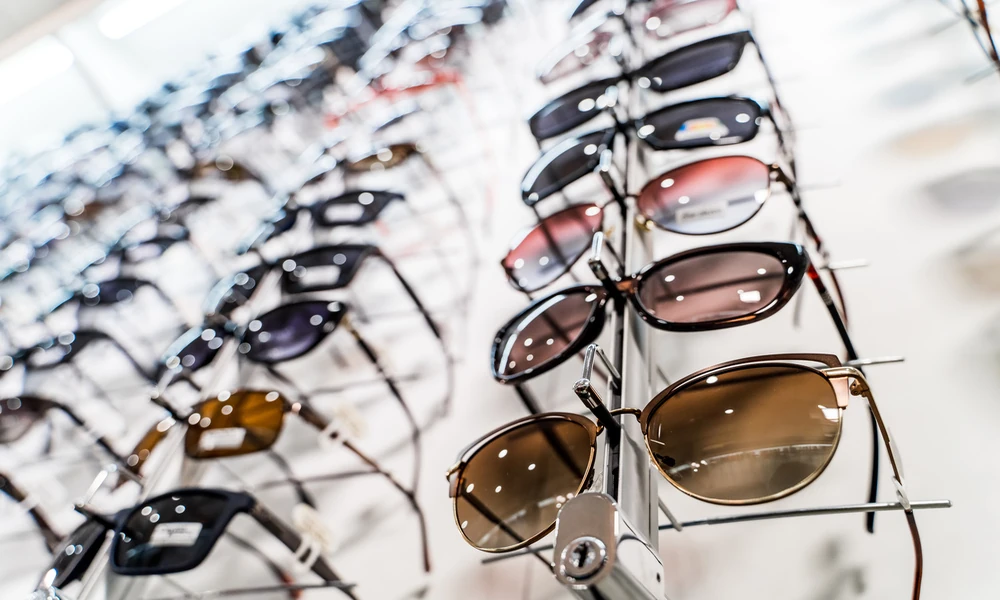
Nobody respects a bargain bin. Shoppers walk up, poke around for ten seconds, pull out a pair of shades with one arm bent at a weird angle, and put it back. Whatever quality those frames actually had got buried under the pile somewhere around day four. The product didn’t fail. The container did.
What a Display Says Without Words
Shoppers price things with their eyes before they ever flip the tag over. Hanging upright on a tidy rack, well lit, a frame looks like a purchase. Tossed in a basket by the register, the exact same frame looks like something to lose on a boat. Fixing that costs almost nothing. Vertical instead of horizontal, a few inches of space between pairs, done. Crowded racks make everything look picked over even on a fresh delivery day.
Good Light, Clean Mirror
Overhead store lighting is usually terrible for lenses. Gray goes murky under it. A tortoise finish flattens into brown plastic. Mirrored lenses lose their flash entirely, which is the only reason anyone buys mirrored lenses. Point one warm light at the rack and watch the whole display wake up. While you’re at it, look hard at your mirror. If it’s a scratched four-inch rectangle covered in fingerprints, it’s actively costing you sales. People need to see their own face clearly to say yes.
Sort It Like Somebody Cared
Here’s something odd. Identical products sell well if organized together. Mix them all up, and you get leftover bits. Organize all the aviators into one column, square glasses into the other, and group the tortoise together, and you suddenly get something that feels selected on purpose. Little labels can work well, so long as they don’t fib. “Polarized” works. “Fits narrow faces” works. But anything with three exclamation points is instantly suspect.
Let Shoppers Test the Build
Everybody checks for flimsiness, regardless of budget. Thumbs press the temples outward. Hinges get folded shut and listened to. Give people room to run that test instead of hiding every pair behind a plastic security tab. Make the UV number easy to read. This one detail flips a lot of undecided customers. And a soft pouch tucked in with the purchase does more than it should. It costs pennies. But it changes the story from disposable to keepable.
Order Well and the Rest Gets Easier
Even excellent merchandizing won’t rescue a frame that creaks. Squeeze the hinge, hold the lens up and look for waves near the edge. Rub the finish with your thumb to see if color comes off. Stocking discount sunglasses doesn’t mean accepting garbage. Shops ordering from OE Wholesale Sunglasses end up with quality shades and enough margin left to actually light and stage their display instead of hiding the whole thing in a basket. After that it’s upkeep. Pull the scratched pairs. Push new arrivals to eye level once a week. As the rack thins out, squeeze the remaining stock together. This way it still looks full rather than abandoned.
Price It Like It’s Worth Something
A handwritten sign yelling three dollars gives shoppers permission to treat the merchandise as trash. Printed tags say something steadier. Two for a small discount tends to work nicely, because the ticket goes up and the customer walks out convinced they outsmarted you. Take your five best-looking frames, give them their own small stand, and price them a step higher. Everything on the main rack starts looking like a deal by comparison, and the nicer pairs sell anyway.
Conclusion
Affordable and shabby are two different things. Mostly all that separates them is a hook, a lamp, and someone willing to wipe the mirror.